Great Migration Safari in Serengeti National Park
Tanzania Safari Tours
A holiday is a dream come true and a once-in-a-lifetime experience for most clients. We understand that every traveler is different, and we proudly offer a range of optional activities or excursions to enhance your safari experience. Our motto is “Explore Africa with Style.”.
- Best time to go : All Year Arround
- 24/7 support
- Expert Guides
- Nice Accommodations
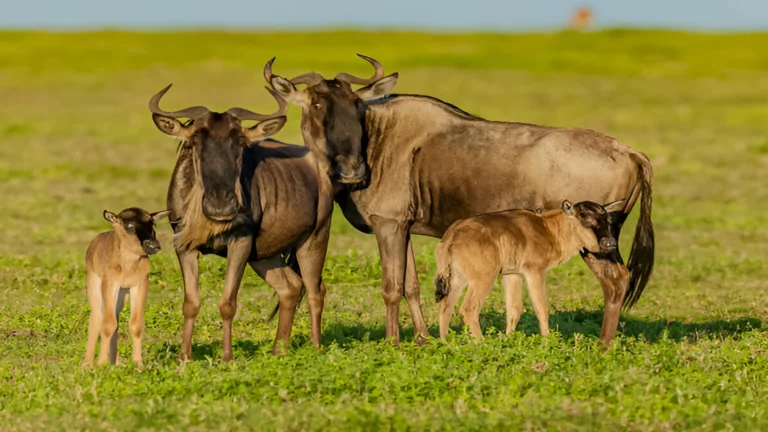
Serengeti National Park
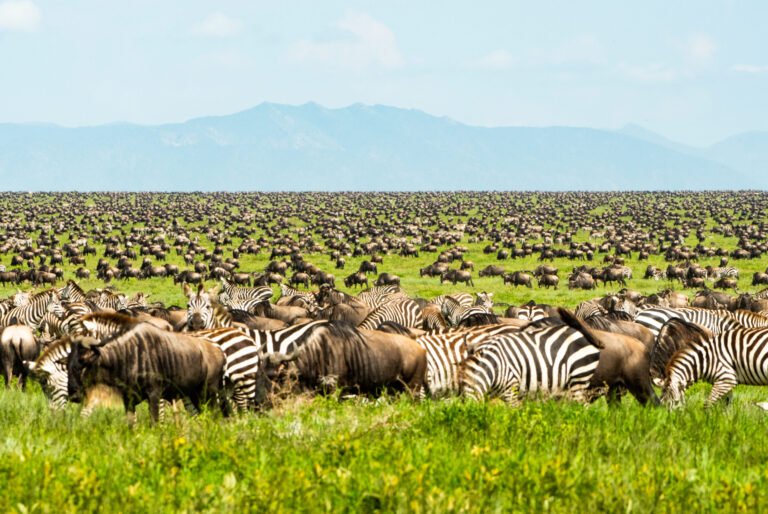
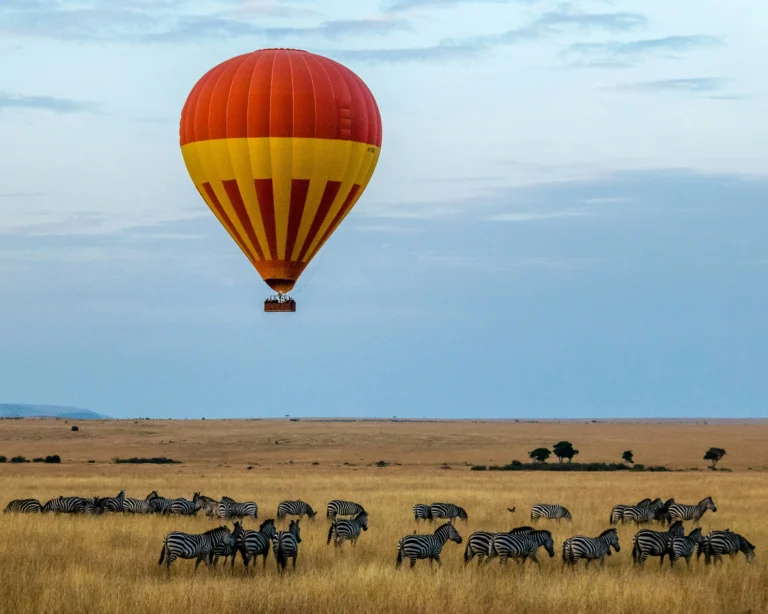
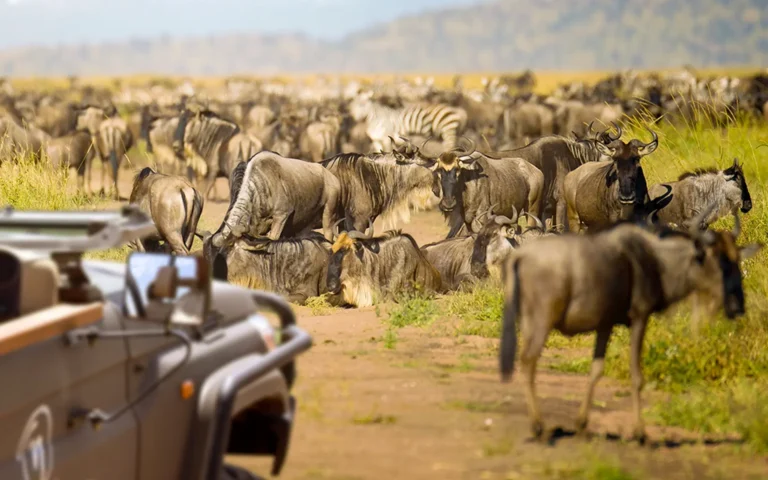
Serengeti National Park is a World Heritage Site teeming with wildlife: over 2 million ungulates, 4000 lions, 1000 leopard, 550 cheetahs and some 500 bird species inhabit an area close to 15,000 square kilometers in size. Join us on a safari and explore the endless Serengeti plains dotted with trees and kopjes from which majestic lions control their kingdom; gaze upon the Great Migration in awe or find an elusive leopard in a riverine forest. Or perhaps see everything from a bird’s-eye view and soar over the plains at sunrise during a hot air balloon safari. Accommodation options come in every price range – the sound of lions roaring at night is complimentary.
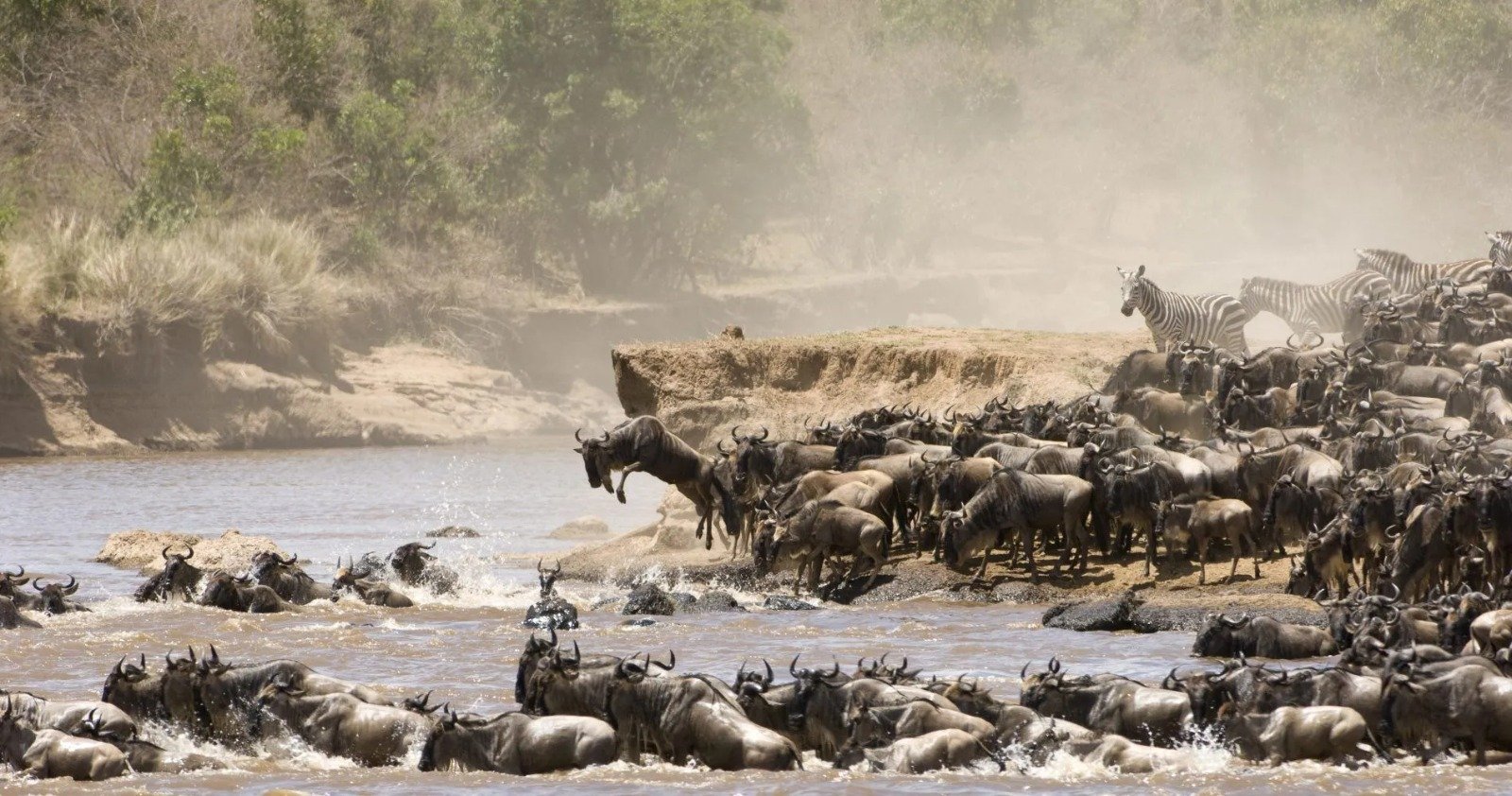
Home to the great migration.
Chances are that you have dreamt of Africa, and when you did, you probably dreamt about the Serengeti. Countless wildlife movies have been recorded in the Serengeti, and with good reason: this is the home of the Great Migration and may very well be one of the last true natural wonders on planet earth.
Serengeti National Park is a World Heritage Site teeming with wildlife: over 2 million ungulates, 4000 lions, 1000 leopard, 550 cheetahs and some 500 bird species inhabit an area close to 15,000 square kilometers in size. Join us on a safari and explore the endless Serengeti plains dotted with trees and kopjes from which majestic lions control their kingdom; gaze upon the Great Migration in awe or find an elusive leopard in a riverine forest. Or perhaps see everything from a bird’s-eye view and soar over the plains at sunrise during a hot air balloon safari. Accommodation options come in every price range – the sound of lions roaring at night is complimentary.
Going on a Serengeti safari
If you are planning a safari to Serengeti National Park, you likely have numerous questions. Naturally, you want it to be the journey of a lifetime, and it will be. Why? There are only a few places left with such unspoiled natural splendor, exhilarating wildlife, and world-class safari lodges & camps.
Plus, we are here to assist with planning your unforgettable adventure in this breathtaking region. We would like to provide a bit more background information—if only to stir the anticipation of going on a Serengeti safari—and answer the questions you might have. Start drafting your bucket list as you read more about your safari trip in the sections below. Find a question unanswered? Make use of the contact form below, and we will be happy to assist you!
| Season | Months | Highlights | Best For |
|---|---|---|---|
| Dry Season | June–October | Animals gather around water sources, vegetation is thinner for easier wildlife viewing, and dramatic river crossings of the Wildebeest Great Migration occur in northern Serengeti National Park. | General wildlife viewing, Great Migration crossings |
| Green Season | November–March | Lush landscapes and excellent photography opportunities. The southern Serengeti and Ndutu area host the wildebeest calving season. | Birdwatching, photography, calving season |
| Rainy Season | April–May | Fewer visitors and quieter parks. The scenery is beautifully green, though some lodges may close due to heavy rains. | Budget safaris, peaceful atmosphere |
Going on a safari in Serengeti National Park is a truly unforgettable adventure, and choosing the right tour operator makes all the difference. For a well-organized, authentic, and memorable safari experience in Tanzania, we highly recommend Mangalo Expeditions.
Mangalo Expeditions
Serengeti Great Migration Safari Tours & Packages 2026
- 8 Days
- 25
8 Days Walking Safari to Ngorongoro and Lake Natron
Starts From $2,350
per person

Connect with our local experts for personalized travel planning or Contact us through info@mangalo-expeditions.com
+255 767 848 463
Mangalo Expeditions
WhyTravel with us?
TALA Licensed Tour Operator
Mangalo Expeditions is Fully registered and licensed tour operator, ensuring safety and professionalism
Local expertise in Tanzania
Highly experienced local guides with deep wildlife knowledge and exceptional guest care.
Sustainable Travel
At Mangalo Expeditons Committed to eco-friendly practices that protect wildlife, support communities
All Iconic Destinations
Mangalo Expeditions is the place to find remarkable wildlife adventures on offer around Tanzania.
Great Safari Deals
We work with our reputable travel partners to find you the best deal for your perfect safari.
Super Easy Process
Once you make an enquiry you are connected directly to the travel partner to complete your booking.
Travelers Reviews
Posted on TripadvisorVerified Amazing experience we planted trees and trash collection. Amazing trip was I didn't think I will get those types of places and friends I invested almost two weeks, but I didn't feel those weeks how i passed. there was excellent organizer. And helped by weather as well. we happily spent our time thank you so much Mangalo Expeditions.Posted on TripadvisorVerified Kilimanjaro + Safari + Tanzania Tour The overall experience was beyond expectations. Plus, the people working with Mangalo made sure that the tour went with utmost comfort. They were always there with us - be it making sure that we get all the essentials for our trek to our exciting itinerary. The accommodations and the food was healthy and we got truly unforgettable memories for life. No kidding. The head of the company - Salla - made absolutely sure that all our needs are met with and we don’t have to worry about anything else, and simply focus on living our best times in Tanzania and Zanzibar.Posted on TripadvisorVerified What an amazing experience!!! It has been one of the most beautiful experiences of my life . I travelled with my son, who invited me to this fantástic trip.Our Mangalo Expeditions host, Salla, provided us the best attention, the best four safari days. We never had to worry about anything.Everything was already set for us.One day visiting Manyara Lake.Two days in the middle of Serengeti, at the Wild Africa Luxury Tented Camp with the finest attention and where we could hear the hyenas in the night barking and passing bye out our tents .The fourth day we were at Ngorongoro Crater .We had the privilege during this trip to meet the Big Five ( elephant, lion, leopard, buffalo and rhyno ) and many other species as giraffes, volters, hyenas, wilbeests, zebras,a cheehta, baboons,jackals,etc.Our gratitude to our experienced game driver Sam, who always taked care of us and tracked the best routes to take us and be able to watch all the magnificent of wild animals in this amazing country Tanzania.Thank you very much!!!Posted on TripadvisorVerified Safari in Tanzania The four days safari that we had with mangalo expeditions was an unforgettable experience. He had the best adventure chasing for the “Big five” in Manyara lake, Serengeti and ngorongoro Crater. Thank you Salla, our tour operator and Sam our guide, the service was impeccable!Posted on TripadvisorVerified "Best Tour In Tanzania" I visited Tanzania, I booked in a Mangalo Expeditions company, I spent 4 days on a wonderful excursion, I saw magnificent landscapes and types of animals, it's a wonderful and unforgettable experience , everything was beautiful and organized service, I have to return, excellent

Tanzania Safari Experience FAQs
The best time for a Tanzania safari is during the dry seasons from June to October and from late December to February. These months offer excellent wildlife viewing as animals gather around water sources, and the weather is more pleasant for game drives in the Serengeti, Ngorongoro Crater, and Tarangire National Park.
Most travelers choose 3 to 7 days for their Tanzania safari, depending on how many parks they want to visit. A shorter safari can focus on highlights like Tarangire and Ngorongoro, while a longer safari allows time to explore the Serengeti and witness the Great Migration.
Tanzania is home to the Big Five (lion, leopard, elephant, buffalo, and rhino) along with cheetahs, giraffes, zebras, wildebeest, hippos, and hundreds of bird species. Each park offers unique encounters—from the endless Serengeti plains to the rich ecosystem of Ngorongoro Crater.
Yes, a Tanzania safari is safe when arranged with a professional company like Tanzania Safari Experience. Safaris are guided by experts who know the parks well, and vehicles are well-equipped to ensure a comfortable and secure adventure.
You don’t need technical climbing skills to climb Kilimanjaro. It’s a trekking mountain, but you should have good physical fitness and be prepared for the effects of altitude. With the support of experienced guides and proper acclimatization, most climbers reach the summit successfully.
The climb usually takes 6 to 8 days depending on the route. Longer routes give your body more time to adjust to altitude, increasing your chances of reaching the summit while enjoying the diverse landscapes of the mountain.
You’ll need a layered clothing system to handle temperatures ranging from tropical heat to arctic cold. Essential items include waterproof hiking boots (broken in before your climb), a warm down jacket rated for sub-zero temperatures, a quality sleeping bag (rated to -10°C or lower), trekking poles for stability, moisture-wicking base layers, waterproof pants and jacket, warm hat and gloves, and a comfortable daypack for carrying water and snacks. Good headlamps, sunglasses, and sunscreen round out the basics. Don’t worry if you don’t own everything—many reputable operators in Arusha rent high-quality gear at reasonable prices, saving you the expense of buying equipment you might only use once.
Your chances of reaching Uhuru Peak depend on several factors you can control. Summit success rates vary from 65% to over 90%. Choosing a longer route dramatically improves your odds—7 to 9-day itineraries give your body more time to adjust. Working with experienced guides who monitor your health and adjust pace makes a huge difference. Your personal preparation matters too: arrive in good physical condition, stay well-hydrated throughout the climb, listen to your body, and don’t push too hard too fast. The phrase “pole pole” (slowly, slowly in Swahili) becomes your mantra. Climbers who rush often fail, while those who pace themselves steadily reach the top.
